Sunday, July 18, 2010

Yoga Breathing - The four phases of wellness

The Sanskrit word sukha indicates something related to the pleasure the joy or happiness. The correct translation of Sukha Pranayama may be: control (ayam) the vital breath (prana) in a pleasant or easy (sukha), while the terms currently used breathing pleasant or easy. 
Yoga breathing exercises should be performed gently and without undue effort. To practice pranayama during yoga sessions, in general, choosing a meditation position as the lotus (Padma Asana) or posture perfect yogi (siddha asanas) in case of difficulty, however, rather than not to practice, you can sit normally, even on a chair. 
Important though is to have the spine, neck and head well aligned vertically and once obtained the best possible position is good freeze until the end of practice. 
A complete respiratory act consists of three phases: inspiration (puraka), retention (kumbhaka) and expiration (recaka). 

The-sukha pranayama includes four specific phases of the same duration (eg nine breaths for each type) each able to develop a quality: 
the first stage we tend to only develop the 'inspiration el' expiration balancing each other and this is the stage commonly called sukha that develops balance and harmony. 

In the second phase loma, it inspires you to retain full lungs and exhaling. The Sanskrit word can mean positive loma, assimilating, and convex heating. This phase, because of the lungs filled with fluid, tends to store energy. 

The third phase viloma provides the following conduct: inhale, exhale and hold to the lungs empty. Viloma stands for negative, oxidative, concave and refreshing. Indeed, this breathing is calming. 

In 'final stage catur (catur is number four in Sanskrit) is developed breathing square where all four phases converge: inhale, hold back on full lungs, exhale, hold back on empty lungs. Here we develop the 'self-control. 

Each of these four steps, if necessary can be used separately to develop their quality. In this case the number of breaths to be made could be decided following the 'goal. Better, however, to avoid unpleasant imbalances, take advice from an experienced master. 
It is also advisable, after the practice; relax for a few minutes on the floor in total state’s neglect, promoting the resumption of spontaneous breathing and natural.

How to prolong life with yoga, yoga exercises for breathing anti-stress

Breathing anti stress regulates the heartbeat, helps calm and concentration, improves sleep quality and of 'existence. 

Against the strain of modern life, instead of 'bitter, five minutes a day of inhaling and exhaling "Wizard". Limitation agree many bodily disciplines, from yoga to tai chi, qi gon from the RAT, which invite you to use conscious breathing techniques to control stress, combat 'anxiety, improve sleep quality and of' existence. 

While a recent scientific study of the 'University of Buffalo confirms that the factor that most affects the length of life is not cigarette smoking or diet, but the volume of' air breathed in one second. 

YOGA EXERCISE FOR BREATHING 
This simple exercise yoga helps to regulate the heartbeat, improves' tissue oxygenation, normalizes metabolism, promotes calm and concentration. Should be tested at least once or twice a week, preferably early in the morning to 'open in a park, crouching at the foot of a tree, his back tightly around the trunk, or at home, sitting on a carpet, leaning against a Wall: 's important is that the place is familiar and comfortable. 

PREPARATION FOR EXERCISE YOGA BREATHING 
- Wear something comfortable, not tight, natural fiber, turn off the phone, and remove the 'watch. Spread in 'air your favorite perfume and select a piece of soft music. 

- Focus your attention on a particular welcome to you: the grass green and the sky (if you have to 'open) the smell (if you're at home), get carried away by the sounds of nature (if you have to' open) and music (if you're at home), close your eyes. 

- Riumanendo sitting, breathing normally the nose five times, gradually increasing the depth of inspirations. Listen to the rhythm of your breathing, which becomes increasingly large. 
- Place a hand on 'abdomen and inhale forcefully contracting (3 seconds) you will hear the hand up towards the' top. When you feel your lungs fill with 'air, exhaling, relaxing (4 seconds). 
- Repeat the sequence ten times, keeping a constant rhythm and always exhale more forcefully. 
- Inhale slowly (6 seconds), then exhale (6 seconds) releasing all the 'air in the lungs. 
- Inhale forcefully (3 seconds) and hold your breath, count acinque. 
- Exhale slowly (6 seconds) 
- Repeat’s last sequence 3 times. 

THE SECRET OF LONGEVITY ' 
During relaxation techniques like meditation and yoga, the need for oxygen is reduced by 20% and some physiological functions, such as heart rate and breathing, the blood pressure and brain electrical rhythms, slow down, while increasing the 'efficiency immune system, circulation of blood and 'energy. 

The therapeutic effects of yoga have been monitored for years in hospitals in Shanghai and Beijing, who have demonstrated 'effectiveness in treating chronic diseases such as' hepatitis 's hypertension,' bronchial asthma and neurasthenia.

Wednesday, July 14, 2010

Yoga for Beginners

We continue to comprehend asanas, with which you can start to learn yoga. 

Pose "Frog" 


Good stretches the back muscles, arms and thighs. 

So here we go. Get on your knees, uprites hands on the floor. Arrange your knees as wide as possible, bend your elbows and lean forward. But do not go. For inspiration, start to lower pelvis to the floor. Then lower the body until the end, put his head on his hands, if you're not stretched out his hands. 

Pose The Crescent 


This asana not only helps to relieve stress, but also well tightens leg muscles, hips and buttocks. 

Stand in the pose of "Triangle". 


Put your left hand on left thigh. Right hand uprites the floor. Slightly bend your right knee, then straighten your right knee, begin to raise the left leg until it is parallel to the floor. Straighten your left arm so that the fingers looked up. Take 3 - 5 breaths. Then put your left hand on left thigh. Slightly bend your right knee and lower left leg. Again, straighten your right knee and take a stance "Triangle". 

Pose "of all finite" 


This posture helps to relax the back muscles, relieves stress and helps to cope with nervous tension. 

Lie on the floor, his hands pull along the body with your palms down. Legs straightened and placed shoulder-width apart. On the inhale bend your knees and pull them to the chest. Then lower the legs and once again pull them to him so that his knees touched his forehead, and the foot looked at the ceiling. Uprites hands in the waist, hold your elbows to your body, straighten your legs, and make 5 - 10 deep breaths. Then bend your legs and lower arms on the floor. Return to starting position. 

Pose "Happy Child" 


Asana relaxes the back muscles, helps to open hips, buttocks and cope with anxiety. 

Lie on the floor, legs bent at the knees, feet pressed to the floor on the width of the hips, arms stretched out along the body, hand look at the ceiling. On the inhale, lift his legs so that knees have sought to shoulders, but not touching them. Make sure that the legs were all the time on the width of the hips. Grasp the foot with his hands. And slightly lower the knees to the side towards the floor. Take 5 - 10 deep breaths. 

Pose "Hero" and pose "the Force" 


The pose makes joints more flexible, helps prepare the mind for meditation, stretches the muscles of the legs. 

Get on your knees, spread your feet. Put hands on the calves. Lower hips to his feet. Take two deep breaths and exhale. On the inhale bend your elbows and bend your body back. Can stay in this position. And you can go ahead and slowly lie down on the floor. Take 5 - 10 deep breaths. Then bend at the elbow, first with one hand, then another, and slowly, lift your torso. 

Pose "Rabbit" 


This asana relieves pain in the back, neck and head, stretches the back muscles and spine, improves digestion, helps to cope with insomnia. 

Take a stance "Kid". Clasp your ankles with his hands. Round the toes toward the floor; uprites crown in the floor. Inhale and exhale. Lift the tailbone. And slightly leaning forward. Take 5 - 10 deep breaths.

Monday, June 28, 2010

Yoga for beginners : Part-2

We continue the story of asanas, which can carry people, just starting to practice yoga. All poses have an impact on the state of our body and mind, regardless of their complexity. 

Pose Corpse 

Corpse Pose or Savasana helps relieve stress and cope with insomnia, headaches easier. 

Lie on your back. Legs stretched out and slightly apart. Arms straight and well separated slightly to the side. Hands are looking up. The waist is pressed to the floor. Relax. Take a few deep breaths. 

Pose "Wide Step" 

This asana is good stretches and strengthens the leg muscles, develop flexibility and relieves stress. 

Let's start with posture "A dog with his head bowed." From this asana take a step forward with your right foot so that foot is caught between his palms. Lower your left knee on the floor. Make sure that the toes and lower leg were pinned to the floor. 

Slowly raise your body. At the same time dilute the hands to the sides and lift upward, so that his hands touched. Your hands should be parallel to the ears. 

Aspiratory rot back as far as you can. Take a few deep breaths. Then slowly return to starting position - "A dog with his head bowed. 

Tilt forward with your legs crossed 

Excellent posture for relaxation and meditation. Sit on the floor, legs crossed. Make 3 deep breaths and exhale. Uprights palm on the floor in front of him and gently lift the hips. Then lower them. For inspiration take a few steps forward with his hands so that the spin at the same time remained straight. Do not round your back. Make 3 deep breaths and exhale. Then, try to stretch them even further, keeping your back straight. Take 3 deep breaths and inhale. Then slowly return to starting position. 

Tilt forward with straight legs 

This is a more complicated position, and you need some time to achieve the flexibility to implement it. This asana stretches well back muscles, shoulders and feet, stimulates the abdominal organs, improves digestion, helps to cope with discomfort during menstruation; facilitates headaches, bad helps in treating insomnia, sinusitis, high blood pressure and infertility. In the ancient texts of this position is written, that it improves appetite, treats illness and promotes weight loss. 

Sit on the floor, legs stretched out before him, buttocks pressed against the floor. Beginners can advise beneath the priest rolled up towel. Raise your hands straight up so that the body makes an angle of 90 degrees. Then inhale slowly starts to tilt body forward until you have a 45 degree angle. Try to keep your back straight. Then grasp the big toes of the thumb and index fingers. On the inhale straighten your back; on the exhale bend your elbows. On the inhale bend forward as you can below. Once you hit the wall, touch his head down. Take 5 - 10 deep breaths. 

Direct lateral angle 

This asana stretches the good leg muscles, waist, chest, shoulders, back, makes the joints more mobile. Moreover, stimulates the abdominal organs. 

You can not do asanas headaches, high blood pressure and insomnia. 

There are two assumptions - "Pose Mountains" or "Pose Warrior II" . We suggest you start with "Poses Mountains. Aspiratory place feet slightly wider than shoulders. Raise your hands parallel to the floor and dilute to the side. Turn the left foot slightly inward, so that she looked to the right, the right foot and then expand outwards. Bend your right leg. Make sure the knee was on the same level with the foot. 

On the inhale, expand the body to the left and right hand uprites elbow in his right knee. The left hand is raised up. Palm facing the direction of the body. Then lower your right foot in front and uprights the floor. Feel the stretch your muscles. 

Once you get comfortable, can complicate the position. To do this, the left hand lower and set up behind his back, arrange the hand over the right thigh. Lift your right hand from the floor and clutched his left hand under the right foot. Take a few deep breaths. 

Then again uprites the floor with his right hand, left, lift up and slowly return to starting position. Repeat for other arm.

Saturday, June 19, 2010

Yoga. Asanas for beginners

Sometimes, looking at the asanas, it becomes a little uncomfortable. Even difficult to imagine what you can create with your body. If you can not afford lessons with a trainer, then here are some tips from what asanas you'd better start.

Pose the Most

Pose the most "good help to relieve stress, stretches the back muscles, chest and neck, stimulates the abdominal organs and helps to eliminate foot fatigue, improves digestion. Well it helps with asthma, high blood pressure, sinusitis, and osteoporosis. A good exercise to improve muscle tone thighs and buttocks.

Lie on your back, bend your legs at the knees, feet pressed to the floor, his hands pull along the body, palm down. On the inhale lift your hips from the floor, hold hands and shoulders firmly against the floor. Lift the hips as possible. Hold this pose for 5 - 10 breaths.

The pose of "Camels"

Pose "Camel" helps relieve mild back pain, pain during menstruation, anxiety and stress. In addition, performing this asana, you have a muscle pull the front of the body, improve posture and work the abdominal organs, as well as energize.

Get on your knees, back straight, your knees should be directly under the hips, round toes. Hands on hips place, so that the fingers looked at the floor.

Then take a deep breathe and feel your ribs move upward, begin to deviate ago. Imagine that, between your legs and back is a big ball. Bending down, round the back. Slowly put his hands on the heel. Take 5 deep breaths, his head thrown back. Do not strain your muscles of the face and neck.

Aspiratory tighten all the muscles and return to the starting position.

Pose "Cats - Cows"

Pose "Cats - Cows" helps relieve stress, stretch the muscles of the body, well relieves stress from the spine, bad working out the muscles of the press.

Get on all fours. Brush directly under shoulders and knees under hips. Round the fingers and toes. Inspiratory rot back into the waist, lift the chest and tailbone, eyes directed forward, throw back his head is not necessary. On the exhale tighten muscles press and a rounded back. Make six repetitions at a slow pace.

Posture "chair"

This asana is good prevention flatfoot. Moreover, well-strengthens the muscles of the hips, buttocks, calves, back. This asana is not recommended for headaches, insomnia and low blood pressures.

Take a stance "Mountains" . On the inhale, lift your hands straight up and bend your knees so your thighs become parallel to the floor, well, or at least aspired to it. Take 10 deep breaths. Feel the burn your muscles.

Pose "Kid"

This is one of the easiest asanas. Nevertheless, she has several useful properties. Thus, this position is good stretches the muscles of the hips, buttocks back. Eases back pain, bad helps with menstrual pain.

It can not be made with the knee injury, diarrhea and pregnancy.

Get on your knees and lower your buttocks to your heels, put his hands on hips. On the inhale bend your body forward and touch the forehead of sex, straighten your arms and lower or front or along the body. Take 5 - 10 deep breaths.

Buddha Konasana
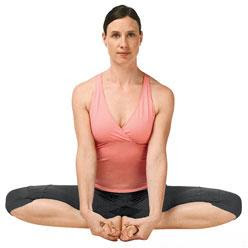
Roughly translated it means "Linked corner, but you can meet even the name" Butterfly pose. It is believed that this is one of the main seating asana yoga. It has a wide range of impacts:

1. Stimulates the internal organs of the abdominal cavity.

2. Improves the functioning of the heart and blood circulation in general.

3. Stretches the muscles of the legs.

4. Relieves depression and stress.

5. Helps to cope with menstrual pain.

6. Perform well as prevention and additions to the treatment: flat feet, asthma, high blood pressure, infertility.

7. It is believed that by performing this asana during pregnancy can ease childbirth.

8. Ancient believed that this position is able to destroy any disease and get rid of fatigue.

That's what a good asana. Sit on the floor, feet come in contact with each other. Grasp the big toes with three fingers of the hand: a big, index and middle. Move the foot as close to the groin. Try to squeeze the thigh to the floor. Keep your back straight. Slowly lean forward and touch the forehead of sex. Make sure that as you lean forward, his back was straight. Take 5 deep breaths.

Pose Cobra
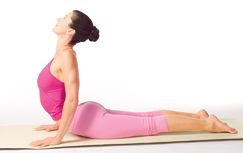
Performing this asana regularly, you'll improve your posture, strengthen the muscles of the buttocks. In addition, it stimulates the internal organs of the abdominal cavity, has a beneficial effect on the heart and lungs.

Ancient texts say that the posture of Cobra eliminates the disease and increases the tone.

You can not do asanas in pregnancy, headaches and back injury.

Lay on your stomach. Uprites palms on the floor in line with the chest. On the inhale slowly begins to detach from the floor: the head, chest and ribs. Rot as much as you can. Take 5 - 10 deep breaths. To the floor.

Performing any asana, remember that you always need to listen to your body. Do not hurry. After all, yoga - not competition, but the opportunity to open a something new. You can hold a pose for as long as you want. After all, some asanas you will enjoy more than others and perhaps will want to stay in them longer.
Sunday, May 30, 2010

Yoga : Parasite Padottanasana

This asana has a positive effect on the brain, liver, and kidneys. It tones the internal organs, calms the mind, relieves back pain, and good stretches leg muscles, buttocks and back. 

Indications: headaches, depression, fatigue. 

Contraindications: problems with the waist.

Technology Implementation 

Not all beginners can perform this exercise until the end. So you have a choice or slightly bent knees, or beneath the blanket over his head. 

1. Stand up in a pose of "Mountains" and spread your legs apart slightly. Hands on hips, place. Make sure that the feet are parallel to each other. Squeeze the foot to the floor as tightly as possible. Tighten your thigh muscles. Inhale and lift your chest higher, pull up. 

2. On the exhale, keeping your back straight, start slowly leaned forward. Once the body is parallel to the floor, uprites hands on the floor. Legs and arms should be perpendicular to the floor. Lift your head so you could see the ceiling. 

Tighten your thigh muscles, and try to arrange the legs as widely as possible. Take a few deep breaths. Now move the hands so that the palms were in line with the feet, ie between the legs. Make a few deep breaths. Bend your elbows toward the feet. And leaned forward even more so that you touched her head sex. The shoulders are lowered. Hold this position from 30 seconds to 1 minute.

3. Then on the exhale move the hands so that they were on both sides of the head, slowly lift the body and return to the starting position. 

I would like to recall that breathing plays an important role in the performance of asanas, it helps to cope c strain and enjoy the exercise. Also be careful that the back remains straight.

Yoga during pregnancy: why and for whom?

During pregnancy the body exposed many chronic illnesses, is associated mainly with the reduction of immune mechanisms. All systems of the body almost from the first day of pregnancy are rebuilt, adapted to the new "status quo". But the complicated psychological and physical condition of women not even these chronic diseases, aggravation of which can be prevented, and daily negative feelings: heartburn, pain in the back and legs, insomnia, bad mood ... All women are not equal to the challenges of pregnancy, each brings their own way. In some cases, yoga helps to overcome the difficulties of pregnancy. 

Yoga - a practice that "helps unite body and mind. For modern man yoga is interesting in that allows you to analyze and control their emotions, which is very valuable in our turbulent world, and to maintain health, to prevent many diseases. At the same time want to note that yoga is not a panacea for disease, it is just a way to stay on a certain level, to prevent the development or progression of disease. Pregnant yoga makes it very mildly physically prepare for the birth (ie - maintain muscle tone, learn to breathe correctly) perceive psychologically calm processes of the organism (many women during pregnancy become emotionally unstable, affecting not only themselves, but also close people). 

Basic yoga for pregnant women: asanas, relaxation, breathing and meditation. Yoga Instructor Catherine Pradal, France 

Asanas 

Not all poses are suitable for pregnant women. The instructor selects the asanas, which help to cope with the increasing load on his back and legs form the habit of a woman's right to sit, stand, lie - to ensure a normal blood flow to the fetus. Regular sessions help women to adapt and at home, easier to carry the usual load, which during pregnancy appear to be severe. 

It is very important asanas, which help tone up the pelvic floor muscles. Normal tone of these muscles is important not only in childbirth but also in the postpartum period - the better the tone, the faster the recovery. 

Relaxation 

Proper relaxation technique is useful at any stage of pregnancy, helps to compensate for the lack of sleep and fatigue (which often occurs during pregnancy insomnia, sleep disturbances of the structure and its inferiority affects the overall well-being and performance): 20 minutes of regular relaxation is equivalent to 2 hours of full sleep. 

Breath 

Pranayama breathing technique that is recommended to practice during pregnancy not only helps to concentrate and recover emotional balance, but also has a direct influence on a child - during a full breathing increases fetal oxygen supply, which provides normal course of development processes. 

Meditation 

Regular practice of meditation can achieve a stable emotional state. As you know, to save the pregnant woman, a safe nurturing environment is important to calm the perception of reality, the ability to adequately respond even to negative events in life. This can be achieved through meditation. 

Doctors and trainers recommend yoga to begin their studies at 3-4 month of pregnancy in the absence of contraindications. It was at this time comes full awareness of the processes occurring in the body, begins rounded belly, a little later a woman can already feel the movement of the child. If a woman had been active in yoga and is familiar with the asanas, it must choose for charging (with instructor) very simple exercises. 

It is recommended to group sessions, as there usually is a positive emotional exchange between participants. Future mothers communicate, consult, ask each other questions, share experiences - all this creates a very favorable environment. As psychologists say, such a communication in communities of interest (by the way, this may be not only yoga) helps women to easily survive the postnatal period, when it can not communicate much with her girlfriends, as in the first months of her attention is focused on the child.